Light
The four o’clock test
By Elise Carter · 28 October 2026 · 3 min read
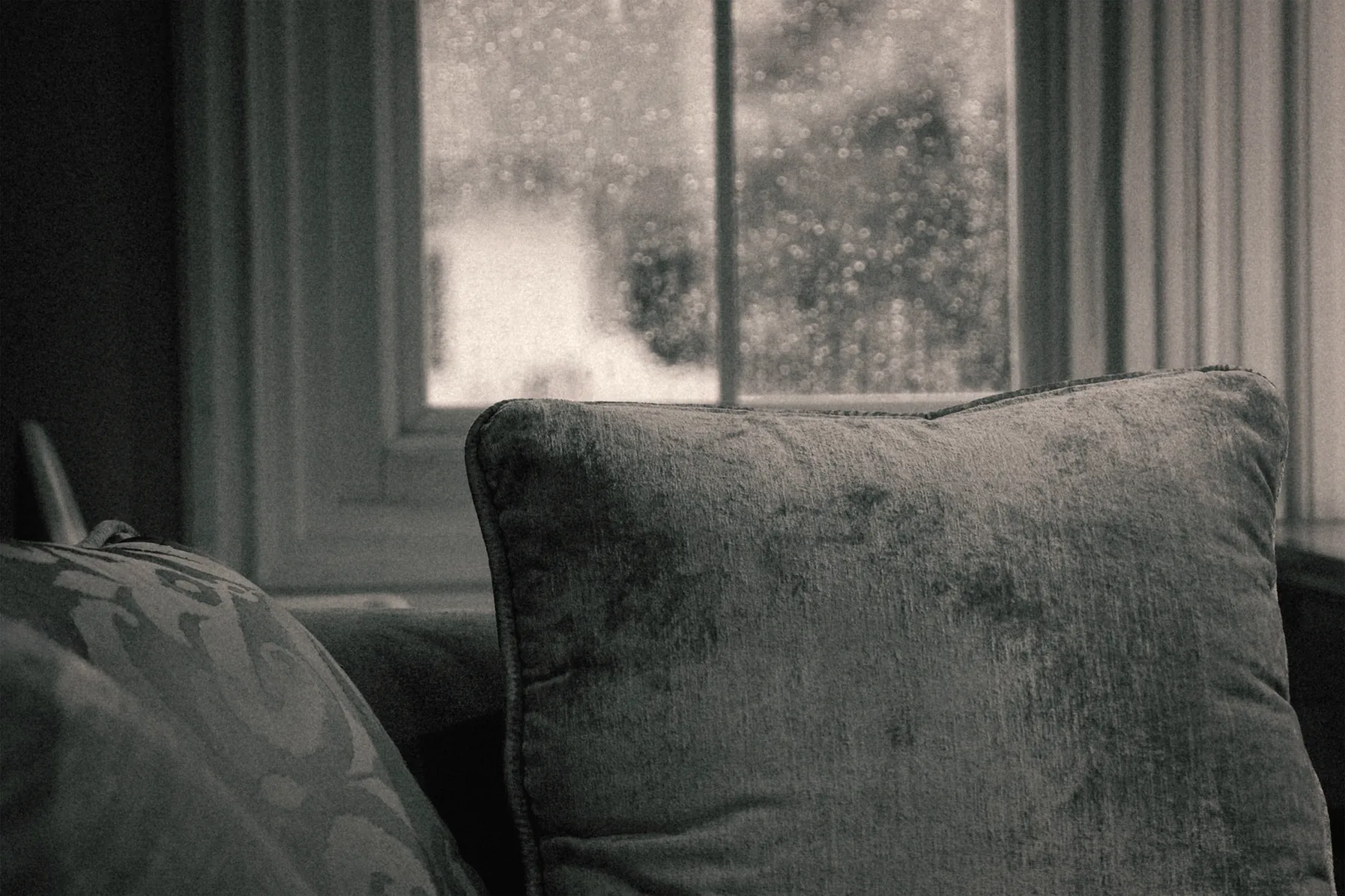
Most clients first write to us in April, when the cherry trees are out and every room looks good. The room will mostly be used in December, at about a quarter past four, when the sun has gone and the sky is the colour of a dishcloth.
So that is when we look at it. Before anything is ordered we go to the site on a grey afternoon, turn the lights off, and stand there for a few minutes. Then we turn on one lamp. If the room gets better, the bones are fine. If it only gets less bad, the surfaces are too cold, and more lighting will not fix that.
What we change
The first fix is nearly always the walls. Pure white goes grey in winter light, and cool stone goes colder. Our Ivory limewash has a little yellow in it. On a bright day it reads as white. On a dull one it reads as cream.
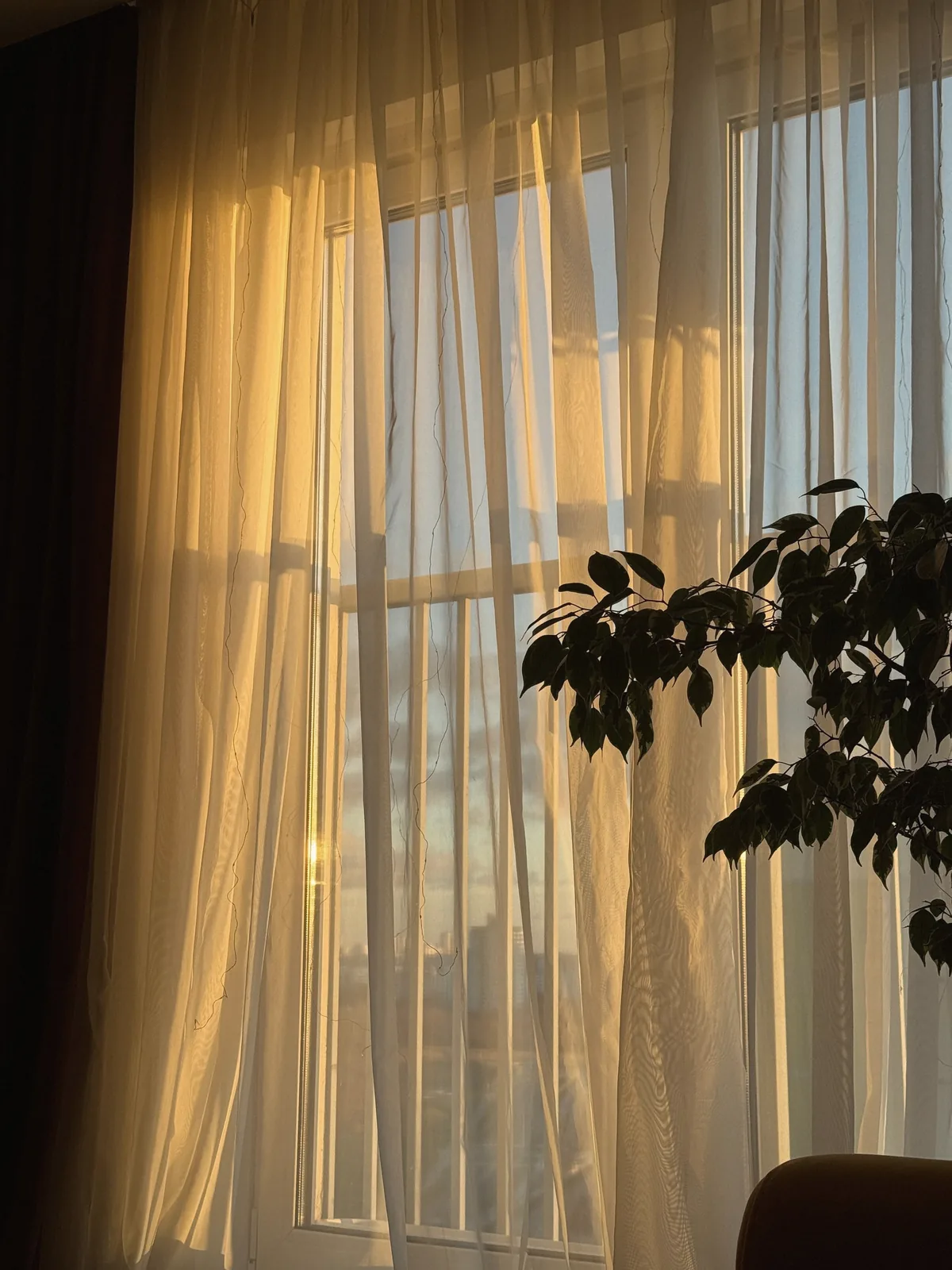
The second is lamps. A room wants light at three heights: a floor lamp by the seating, a table lamp at counter height, and something low, a wall light or a candle, for later. We put them in the first set of drawings so the sockets and switches end up where the lamps are.
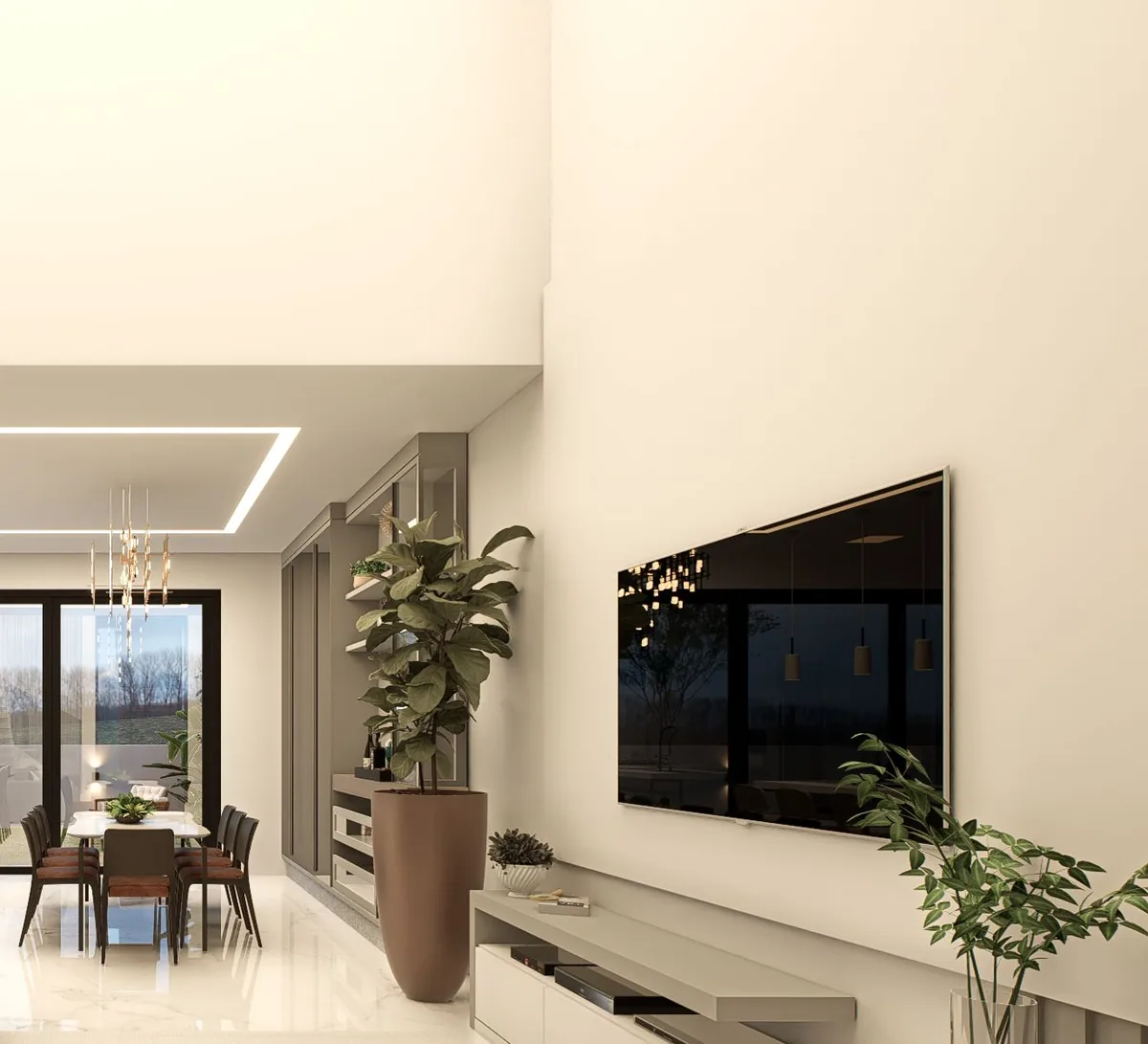
The third is the window. In the Hollyburn living room the sheers run from ceiling to floor on their own track, so the window looks like one soft sheet of light and not a hole in the wall. There are no blinds anywhere in the house.
Most of it is cheap. It just has to be decided in April.