Materials
Honed, not polished
By Jun Park · 2 August 2026 · 4 min read
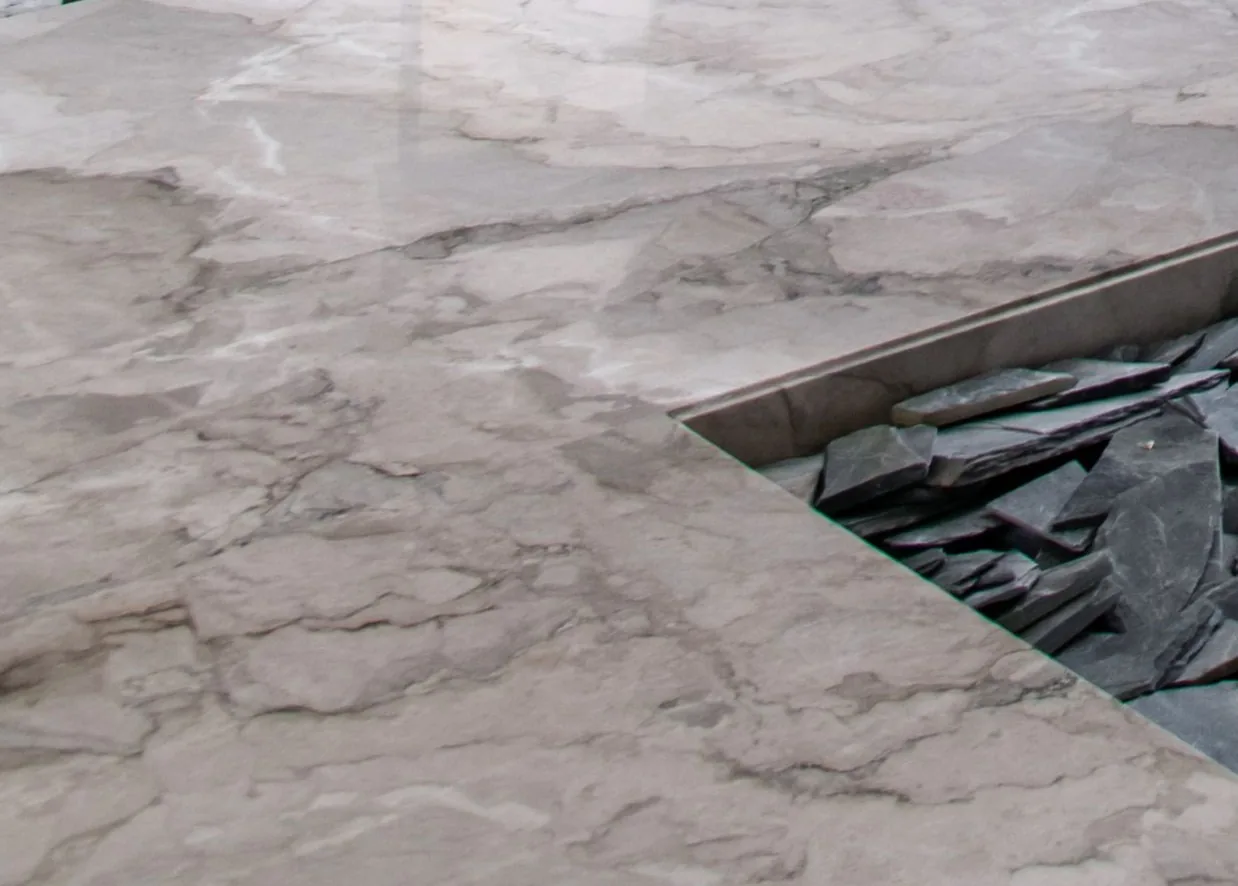
Polished marble is shiny enough that you notice the shine first. Honed marble is flat and matte, and you notice the stone.
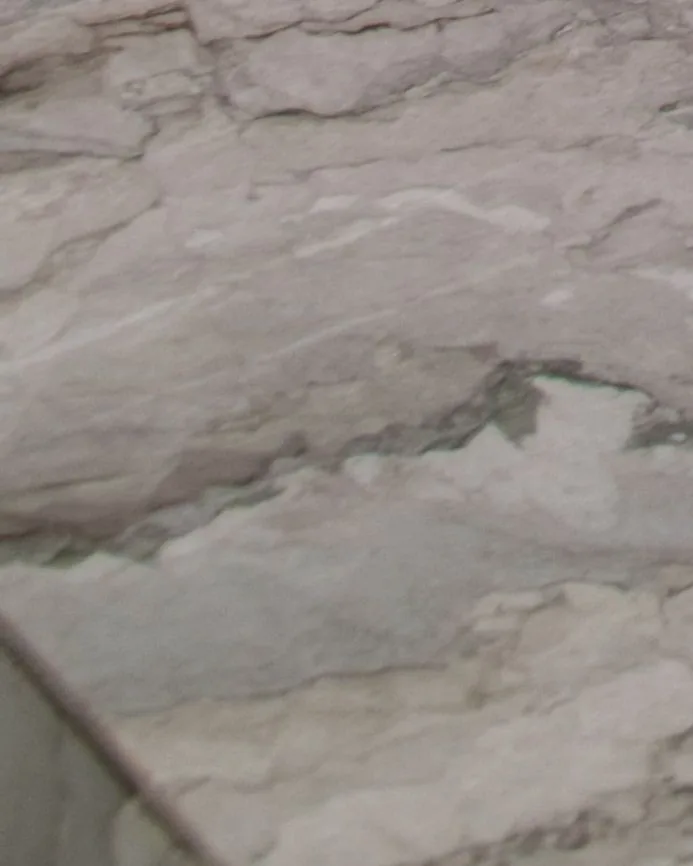
I spent a Saturday last spring at a slab yard in Burnaby with the Hollyburn clients, walking between racks of marble with a torch. By the third rack they were quiet. By the fifth they had picked a slab with a long grey vein, which I would not have chosen, and they were right.
What honing does
Polishing runs the surface through finer and finer abrasives until it reflects. Honing stops earlier. The colour is slightly softer and the veining quieter.
The catch
Marble is soft and reacts to acid. Lemon, vinegar and wine leave dull marks called etching. On a honed surface those marks barely show, because there is no shine for them to interrupt. Honed stone is also more porous, so we seal it, and we tell clients to expect a patina. After a few years it develops a worn, lived-in surface that most of them end up preferring.
Choosing the slab
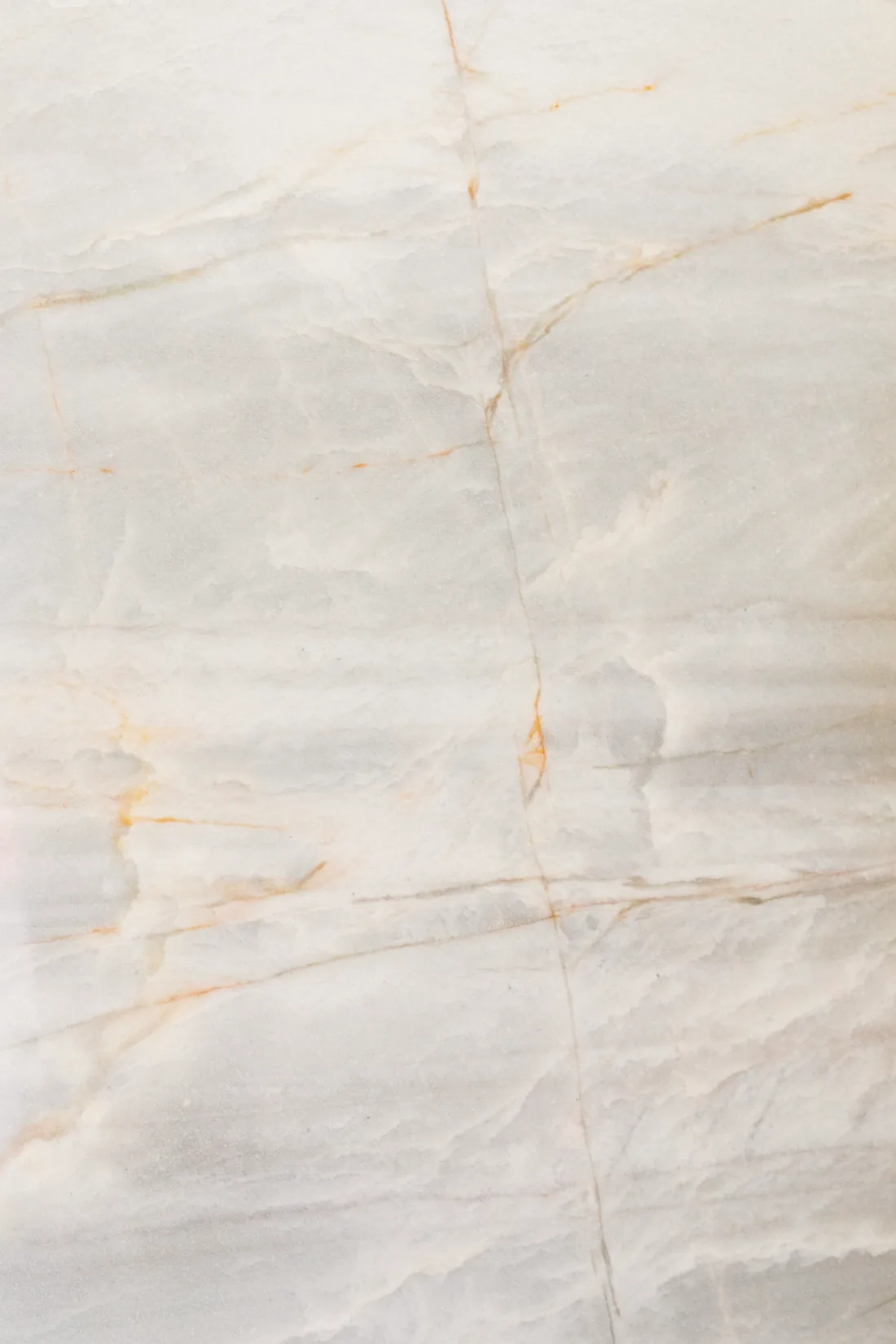
We go to the yard in person. Photographs of slabs lie, and the colour moves with the light in the warehouse. We choose the slab, mark where the cuts will go, and book-match the veining so it runs across a table or up a wall without a break.
On a kitchen counter we use it less. It can be done, but if you cook every day and don’t want to think about it, quartzite or porcelain will be kinder to you.